
Showing the single result
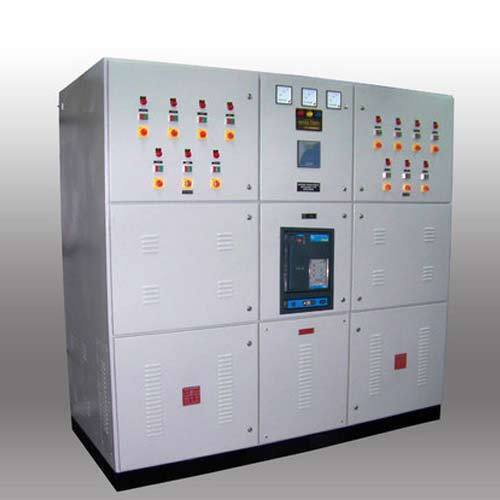
APFC Control Panel Manufacturer in India for Reliable Power Factor Correction
Autologic Controls is a trusted APFC Control Panel Manufacturer in India offering customized Automatic Power Factor Correction panels for factories, commercial buildings, pumping systems, process plants and industrial utilities.
Our APFC panels are engineered around the connected load, existing power factor, target power factor, transformer capacity, harmonic conditions,capacitor-bank rating and installation environment.
Each panel can be configured with an intelligent power-factor controller,capacitor stages, suitable switching devices, electrical protection,metering and organized internal wiring.
What Is an APFC Control Panel?
APFC stands for Automatic Power Factor Correction.
An APFC panel continuously monitors the electrical system and automatically adds or removes capacitor stages as the connected load changes.
Its controller receives voltage and current information, calculates the power factor and operates the required capacitor stages.
A professionalAPFC Control Panel Manufacturer in Indiahelps ensure that the capacitor-bank rating, switching method, stage sizes and protection system match the actual electrical load.
Why Is Power Factor Correction Important?
Industrial motors, transformers, pumps, compressors and other inductive loads consume reactive power.
A poor power factor can increase current flow for the same useful load,adding stress to cables, transformers and electrical-distribution
equipment.
An APFC panel automatically switches capacitor stages according to
changing reactive-power demand.
A project-focusedAPFC Control Panel Manufacturer in Indiacan assess the application according to:
- Present power factor
- Target power factor
- Connected operating load
- Transformer rating
- Existing capacitor banks
- Daily load variation
- Harmonic levels
- Utility requirements
- Future electrical expansion
Customized APFC Panels for Industrial Projects
Every industrial facility has a different load profile and operating
pattern.
A textile plant with many motors may require a different capacitor-stage arrangement from a commercial building, pumping station or
food-processing unit.
As a custom
APFC Control Panel Manufacturer in India,
Autologic Controls can design panels around:
- Required capacitor-bank kVAR rating
- Number of capacitor stages
- Automatic stage sequencing
- Contactor or thyristor switching
- Detuned-reactor requirements
- Incoming breaker rating
- Copper or aluminium busbars
- Metering and monitoring
- Indoor or outdoor installation
- Required enclosure IP rating
- Top or bottom cable entry
- Preferred capacitor and switchgear brands
- Communication requirements
- Future load expansion
APFC Panel Features
A dependable APFC Control Panel Manufacturer in Indiashould configure the panel according to actual load conditions rather than selecting the capacitor-bank capacity only from the transformer
rating.
- Automatic power-factor monitoring
- Multi-stage capacitor switching
- Programmable target power factor
- Automatic and manual operating modes
- Individual stage-status indication
- Current and voltage measurement
- Alarm and fault indication
- Overcurrent protection
- Short-circuit protection
- Capacitor-bank protection
- Over-temperature protection
- Phase-failure monitoring
- Clearly labelled terminals
- Ferruled internal wiring
- Separate power and control sections
- Ventilation or cooling arrangements
- Spare capacity for future stages
- Communication options where required
How an APFC Panel Works
The APFC relay continuously evaluates the relationship between active and reactive power.
When the power factor drops below the programmed target, the controller switches one or more capacitor stages into the electrical system.
When reactive-power demand decreases, the controller disconnects
unnecessary stages to reduce the possibility of overcorrection.
- Current and voltage sensing
- Power-factor calculation
- Comparison with the programmed target
- Selection of the required capacitor stages
- Automatic stage switching
- Continuous monitoring and correction
Capacitor-Bank Stage Configuration
Correct capacitor-stage sizing is important because an unsuitable
combination can cause frequent switching, poor correction or
overcompensation.
An experienced APFC Control Panel Manufacturer in Indiacan arrange capacitor stages using:
- Equal-step sequencing
- Unequal-step sequencing
- Binary-step arrangements
- Fine and coarse correction stages
- Fixed and automatic capacitor stages
- Spare stages for future expansion
The correct configuration depends on how quickly and widely the connected
load changes during normal operation.
Contactor-Switched APFC Panels
Contactor-switched panels are commonly used where the electrical load changes at a moderate rate.
- Capacitor-duty contactors
- Discharge resistors
- HRC fuse protection
- APFC relay control
- Automatic stage sequencing
- Thermal protection
- Stage-status indications
This configuration can suit manufacturing plants, commercial buildings, pumping applications and facilities with reasonably stable load changes.
Thyristor-Switched APFC Panels
Thyristor switching may be considered where electrical loads change
rapidly and frequent capacitor switching is required.
- Welding systems
- Cranes and hoists
- Lifts
- Rolling mills
- Printing machinery
- Rapidly cycling production equipment
- Other fast-changing industrial loads
The final switching method should be selected after reviewing load
variation, harmonic conditions and the approved electrical design.
Detuned APFC Panels and Harmonic Protection
Capacitor banks can interact with harmonics in an electrical system.
Where significant non-linear loads are present, the panel design may
require detuned reactors or another suitable harmonic-management method.
A technically capableAPFC Control Panel Manufacturer in Indiashould review harmonic information before finalizing the capacitor-bank arrangement.
Common harmonic-producing loads include:
- Variable Frequency Drives
- UPS systems
- Rectifiers
- Welding machines
- Induction furnaces
- Switched-mode power supplies
- LED drivers
- Data-centre equipment
A detuned APFC panel may include:
- Capacitor banks suitable for reactor duty
- Detuned reactors
- Thermal protection
- Harmonic-compatible switching devices
- Suitable ventilation
- Correctly selected electrical protection
Panel Construction and Enclosure Options
The enclosure should be selected according to dust, heat, moisture,
corrosion risk, installation location and maintenance access.
- CRCA mild-steel enclosure
- Stainless-steel construction where required
- Powder-coated surface finish
- Floor-mounted or wall-mounted construction
- Single-front or double-front access
- Separate incomer and capacitor-bank sections
- Top or bottom cable entry
- Removable gland plates
- Internal wiring ducts
- Ventilation fans
- Temperature-controlled cooling
- Dedicated earthing busbar
- Indoor or outdoor installation
- IP42, IP54, IP55 or IP65 options
Copper and Aluminium Busbar Options
The busbar system distributes electrical power from the incomer to the individual capacitor stages.
Its material and size should be selected according to rated current,
capacitor-bank capacity, fault level, temperature rise and future
expansion.
As a customizedAPFC Control Panel Manufacturer in India, Autologic Controls can develop the panel with copper or aluminium busbars according to the approved design.
Branded Components and Protection Devices
Component selection affects switching reliability, capacitor life,
maintenance requirements and spare-parts availability.
Panels can be developed using consultant-approved components from brands such as:
- Schneider Electric
- Siemens
- ABB
- L&T
- C&S
- Havells
- EPCOS or other approved capacitor brands
- Other consultant-specified manufacturers
Typical APFC Panel Specifications
| Parameter | Typical Specification |
|---|---|
| Panel Type | Automatic Power Factor Correction Panel |
| Operating Voltage | 415V AC, three phase, 50Hz or as specified |
| Capacitor-Bank Rating | Customized according to the calculated kVAR requirement |
| Number of Stages | Configured according to load variation and correction accuracy |
| Switching Method | Capacitor-duty contactor or thyristor switching |
| Controller | Microprocessor-based APFC relay |
| Harmonic Protection | Detuned-reactor option where required |
| Busbar Material | Copper or aluminium |
| Enclosure Material | CRCA mild steel or stainless steel |
| IP Protection | IP42, IP54, IP55 or IP65 options |
| Installation Type | Indoor or outdoor |
| Protection |
Short circuit, overcurrent, phase failure and over-temperature options |
| Customization | Stage arrangement, component brands, enclosure and communication |
APFC Panels for Industrial Applications
A project-specific
APFC Control Panel Manufacturer in India
can manufacture power-factor correction panels for:
- Textile plants
- Pharmaceutical facilities
- Chemical-processing units
- Food and beverage factories
- Ceramic industries
- Plastic and rubber plants
- Packaging facilities
- Engineering workshops
- Pumping stations
- Water-treatment plants
- Sewage-treatment plants
- HVAC systems
- Hospitals
- Hotels
- Shopping centres
- Commercial buildings
- Warehouses
- Data centres
- Infrastructure projects
APFC Panels for Motor-Heavy Plants
Plants operating many electric motors can experience changing
reactive-power demand throughout the day.
- Pumps
- Compressors
- Blowers
- Fans
- Conveyors
- Mixers
- Machine tools
- Textile machinery
- HVAC equipment
Multiple capacitor steps allow compensation to follow the changing motor load more closely.
APFC Panels for Commercial Buildings
Commercial properties may require centralized power-factor correction
for:
- HVAC systems
- Lifts
- Pumps
- Ventilation equipment
- Lighting systems
- Utility loads
- Common-area services
- Tenant electrical loads
Our Design and Manufacturing Process
1. Requirement Review
The engineering team reviews the electricity bill, existing power factor,target power factor, transformer capacity, connected-load list and site conditions.
2. Technical Calculation
As anAPFC Control Panel Manufacturer in India,
the team calculates the required capacitor-bank capacity and suitable stage distribution.
3. Harmonic Review
The connected load is reviewed for VFDs, UPS systems, rectifiers and other non-linear equipment that may influence the APFC design.
4. Component Selection
The controller, capacitors, contactors or thyristors, reactors,
protection devices, meters and accessories are selected.
5. Enclosure Fabrication
The enclosure is fabricated according to the required dimensions,
installation type, ventilation and IP protection.
6. Busbar and Component Assembly
Busbars, capacitor stages, switching devices, terminals and control
components are installed according to the approved layout.
7. Internal Wiring
Power and control wiring is completed with ferrules, labels and terminal identification.
8. Functional Testing
The panel is checked for stage switching, controller operation,
indications, electrical protection, continuity and operating logic before
dispatch.
9. Documentation and Delivery
Applicable drawings, component schedules and technical information can be supplied according to the confirmed project scope.
Information Required for an APFC Panel Quotation
To receive a technically relevant proposal, provide:
- Present power factor
- Desired power factor
- Transformer rating
- Connected-load details
- Recent electricity bill or load data
- Existing capacitor-bank capacity
- Required kVAR rating, when known
- VFD, UPS or harmonic-producing load details
- Incoming current rating
- Preferred capacitor and switchgear brands
- Required switching method
- Detuned-reactor requirement
- Enclosure material
- Required IP rating
- Indoor or outdoor installation
- Cable-entry direction
- Communication requirements
- Site location
- Panel quantity
- Consultant specification
- Required delivery schedule
Providing complete details helps theAPFC Control Panel Manufacturer in India prepare a suitable capacitor-stage design, component schedule and commercial quotation.
Why Choose Autologic Controls?
- Customized APFC panel engineering
- Ahmedabad-based manufacturing
- Automatic capacitor-stage control
- Contactor and thyristor switching options
- Detuned-reactor configurations
- Copper or aluminium busbars
- Branded capacitors and switchgear
- Indoor and outdoor enclosures
- IP-rated panel construction
- Organized internal wiring
- Testing before dispatch
- Consultant-drawing support
- Pan-India delivery support
- Replacement and retrofit solutions
- Project-specific quotations
Choosing a directAPFC Control Panel Manufacturer in Indiagives electrical contractors, consultants and plant teams access to the engineering and manufacturing team throughout calculation, design, assembly, testing and dispatch.
Frequently Asked Questions
1. What does an APFC panel do?
An APFC panel monitors power factor and automatically switches capacitor stages to compensate for changing reactive-power demand.
2. Why is power factor correction required?
Proper power-factor correction can reduce unnecessary reactive-current flow, improve electrical-system efficiency and release usable capacity in cables and transformers.
3. How is APFC panel capacity calculated?
The required kVAR depends on the connected load, present power factor,
desired power factor, load variation and harmonic conditions.
4. What is the difference between fixed and automatic capacitor banks?
A fixed capacitor remains connected continuously, while an APFC panel automatically adds or removes capacitor stages as the electrical load changes.
5. When are detuned reactors required?
Detuned reactors may be required where the electrical installation
contains significant harmonic-producing loads such as VFDs, UPS systems or rectifiers.
6. Can APFC panels be customized?
Yes. A professional APFC Control Panel Manufacturer in Indiacan customize the kVAR rating, number of stages, switching method,capacitor brand, reactor arrangement, enclosure and communication options.
7. Can an APFC panel be installed outdoors?
Yes. Outdoor APFC panels can be manufactured with suitable enclosure
construction, ventilation and IP protection after reviewing the site
environment.
8. What information is required for pricing?
Share the present and target power factor, transformer capacity,
connected-load details, required kVAR, harmonic-load information,
enclosure requirement, quantity and site location.
Request a Customized APFC Panel
Choose an experiencedAPFC Control Panel Manufacturer in India for a power-factor correction panel designed around your connected load, existing power factor, target power factor, harmonic conditions and installation environment.
Share your transformer capacity, load details, present power factor,preferred components and site location to receive a project-specific proposal.